Frequently Asked Questions

Considered answers to the questions most often raised.

Vanuatu citizenship by investment is a fully legislated Commonwealth programme completed in approximately 45 days, with no residency requirement and full family inclusion. Pricing starts at $130,000 USD (DSP donation) or a flat $165,000 USD (CIIP fund investment, partially redeemable after five years).

A quiet reference for those exploring strategic second citizenship through Vanuatu. For circumstances beyond the scope of these notes, a confidential conversation is always the more useful starting point.

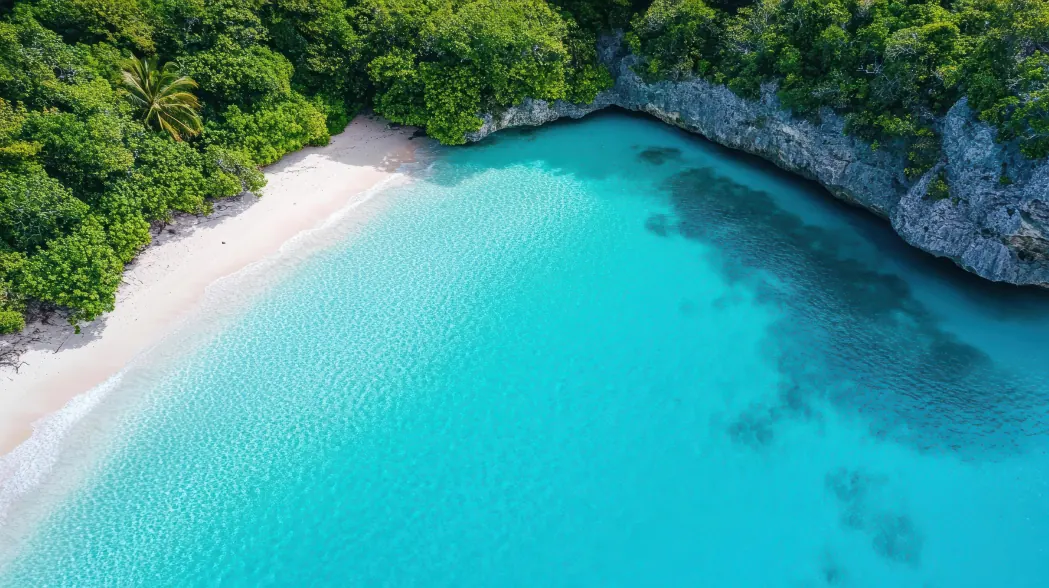
A quiet Vanuatu cove
Category

Programme Overview

01

Is the Vanuatu citizenship programme legitimate?

Yes. The Vanuatu Citizenship by Investment Program is officially established and regulated by the Government of Vanuatu and includes strict due diligence procedures for every applicant. The advisors are official government-designated agents for the program. They process applications directly with the Vanuatu Government, operating out of offices in Port Vila and Sydney.

Category

Understanding Vanuatu Citizenship by Investment

02

What is Vanuatu Citizenship by Investment?

Vanuatu Citizenship by Investment is a fully legislated programme that allows qualified applicants to acquire Vanuatu citizenship in exchange for an approved government contribution or investment. It is one of the fastest second-citizenship pathways in the world, typically completed within 45 to 60 days, with no residency requirement.

The programme is regulated under the Vanuatu Citizenship Act and administered by the Citizenship Commission, with all applications submitted through government-designated agents.

03

How does the Vanuatu Citizenship by Investment Program work?

Applicants engage a government-designated agent, complete preliminary due diligence, and select either the DSP donation pathway or the CIIP fund-investment pathway. Once documentation is verified and government screening is complete, citizenship is granted by Order in Council and a passport is issued.

The entire process is typically completed remotely within 45 to 60 days from the receipt of a complete file.

04

Why do people obtain a second citizenship?

People obtain second citizenship for greater global mobility, asset and political diversification, tax-efficient planning, family security, and as a strategic Plan B against instability in their home jurisdiction. For internationally minded families, a second passport is a quiet hedge, held in reserve and rarely discussed.

05

What are the benefits of Vanuatu citizenship?

Vanuatu citizenship delivers visa-free or visa-on-arrival access to a broad range of jurisdictions, lifetime status with no renewal, full family inclusion, no residency or language requirement, and access to a tax-neutral jurisdiction. The programme is also notable for its speed, typically 45 to 60 days, and its confidentiality.

06

Why is Vanuatu considered a popular Plan B citizenship?

Vanuatu is favoured as a Plan B because it combines Commonwealth status, political stability, a tax-neutral framework, and an efficient legislated pathway with no residency obligation. Citizenship is granted for life, can be passed to descendants, and gives families optionality without disrupting existing residency or business arrangements.

07

Vanuatu vs Caribbean citizenship by investment — which is better?

It depends on what the citizenship is for. Vanuatu is the fastest (45–60 days) and most cost-efficient (from USD 130,000) programme in the world, with a tax-neutral framework and the most discreet record-keeping. The Caribbean programmes (St Kitts, Antigua, Dominica, Grenada, St Lucia) cost more and take 4 to 6 months, but they retain visa-free Schengen access.

Families choosing on speed, cost and privacy typically choose Vanuatu. Families whose priority is regular European travel typically choose a Caribbean programme. Some hold both.

08

Can I hold dual citizenship with Vanuatu?

Yes. Vanuatu fully permits dual and multiple citizenship. You may retain your existing nationality alongside your Vanuatu passport, subject to the laws of your country of origin. For most applicants, no disclosure to their home jurisdiction is required by Vanuatu itself.

09

Is Vanuatu citizenship permanent?

Yes. Once granted, Vanuatu citizenship is for life. There is no renewal process, no recurring fee to maintain status, and no obligation to visit or reside in Vanuatu. It becomes a permanent asset that can be passed to future generations.

10

Can Vanuatu citizenship be revoked?

Vanuatu citizenship may only be revoked in narrow circumstances, principally where it was obtained through fraud, material misrepresentation, or concealed criminal history. Applicants who disclose accurately and pass due diligence retain their citizenship for life without risk of revocation.

11

What rights does a Vanuatu citizen have?

Vanuatu citizens hold the right to enter, live, work and own property in Vanuatu, to hold a Vanuatu passport, to pass citizenship to their children, and to travel visa-free or visa-on-arrival to a wide range of jurisdictions. Citizens are also entitled to the legal protections afforded by Vanuatu as a Commonwealth member state.

12

Can Vanuatu citizens live and work in Vanuatu?

Yes. Vanuatu citizens have the unrestricted right to live, work, study and conduct business in Vanuatu, including the right to own land, which is otherwise restricted for foreign nationals. There is, however, no obligation to relocate at any time.

Category

Eligibility Requirements

13

Who can apply for Vanuatu Citizenship by Investment?

Any individual aged eighteen or over, of good character, with a clean criminal record and a verifiable legitimate source of funds may apply, subject to government due diligence. Spouses, dependent children and, in qualifying cases, dependent parents may be included on the principal application.

14

What is the minimum age to apply?

The principal applicant must be at least eighteen years of age. Dependent children and parents may be included under the family-tier structure subject to documentary evidence of relationship and dependency.

15

Can married couples apply together?

Yes. A lawful spouse may be included on the principal applicant's file under the family-tier structure, with a single coordinated due diligence process. A marriage certificate, properly certified and translated where required, is part of the standard documentation.

16

Can unmarried partners be included?

The programme is structured around lawful spouses and recognised legal relationships. Unmarried partners are generally not included on a single application, although each may apply in their own right as a principal applicant. The advisers can review individual circumstances confidentially.

17

Can children be included in the application?

Yes. Dependent children may be included on the principal's application, subject to age and dependency criteria set by the Citizenship Commission. Birth certificates and, where relevant, evidence of full-time education or dependency are required.

18

Can parents be included in the application?

Dependent parents may be included where genuine financial dependency on the principal applicant can be demonstrated. Each parent undergoes the same due diligence as the principal and is assessed individually.

19

Can grandparents be included?

Grandparents are not within the standard dependent definition under the programme. They may, however, apply in their own right as principal applicants where they meet the eligibility and source-of-funds requirements.

20

Are there any nationality restrictions?

Yes. A limited number of nationalities are restricted or subject to enhanced scrutiny in line with international sanctions and risk frameworks. The list is periodically reviewed by the Citizenship Commission. The advisers will confirm eligibility for your specific nationality before any fees are committed.

21

Do I need to have a clean criminal record?

Yes. A police clearance certificate from every jurisdiction of significant prior residence is required. Applicants must be of good character with no record of serious offences. Minor historical matters are assessed on their facts and do not automatically preclude eligibility.

22

What happens if I have previously been denied a visa?

A prior visa refusal does not automatically disqualify an applicant, but it must be disclosed in full. The Citizenship Commission considers the circumstances of any refusal as part of its due diligence. Non-disclosure is a more serious concern than the refusal itself.

Category

Costs and Investment Options

23

How much does Vanuatu Citizenship by Investment cost?

Pricing depends on the pathway and family size. The DSP donation pathway starts at $130,000 USD for a single applicant, scaling for families. The CIIP fund-investment pathway is a flat $165,000 USD covering a single applicant through a family of four, with a portion partially redeemable after five years.

24

What is the minimum investment required?

The minimum is $130,000 USD under the DSP for a single applicant. Government fees, professional fees and due diligence charges sit alongside the headline contribution, all of which are itemised in the formal engagement letter.

25

What is the Development Support Program (DSP)?

The DSP is a non-refundable government contribution pathway directed to the Vanuatu Treasury for national development priorities. It is the most straightforward and quickest route, starting at $130,000 USD for a single applicant and scaling for spouses, children and dependent parents.

26

What is the Capital Investment Immigration Plan (CIIP)?

The CIIP is a fund-investment pathway at a flat $165,000 USD covering a single applicant through a family of four. A portion of the contribution is held in a regulated investment vehicle and is partially redeemable after five years, making it the more efficient choice for most family applications.

27

Which option is best for families?

For most families of three or four, the CIIP is the more economical pathway at a flat $165,000 USD with a partial five-year redemption feature. Smaller applications, or those prioritising the simplest possible structure, often favour the DSP. The advisers will model both against your specific composition.

28

Are government fees included in the quoted price?

The headline pathway figures cover the qualifying contribution. Government processing fees, due diligence fees and professional advisory fees are quoted separately and itemised in your engagement letter so there are no surprises at any stage.

29

Are due diligence fees payable separately?

Yes. Government due diligence fees are payable per applicant and per dependant, and are settled at the outset of the formal application so that screening can commence. These fees are non-refundable as they fund independent background checks regardless of outcome.

30

Are there ongoing annual costs?

No. Vanuatu citizenship carries no annual maintenance fee, renewal cost or recurring obligation. The only future cost is passport renewal every ten years, at a modest standard fee.

31

Is the investment refundable?

Under the DSP the contribution is a donation and is not refundable. Under the CIIP a portion of the contribution is held in a regulated investment vehicle and is partially redeemable after five years, subject to the terms of the fund.

32

What other expenses should I budget for?

Beyond the qualifying contribution, applicants should budget for government processing and due diligence fees, professional advisory fees, document certification and translation, medical reports, police clearances, and passport issuance fees. The advisers provide a fully itemised estimate before any commitment.

Category

Application Process

33

How long does the process take?

Most applications are completed within 45 to 60 days from the receipt of a complete file. Timelines depend on the responsiveness of document gathering and the depth of due diligence required. Vanuatu remains one of the fastest legislated citizenship-by-investment programmes in the world.

34

Can the application be completed remotely?

Yes. The entire process is completed remotely. Documents are couriered or transmitted securely, identity verification is conducted via certified channels, and the Vanuatu passport is delivered to your chosen address worldwide. No travel to Vanuatu is required at any stage.

35

Do I need to visit Vanuatu?

No. There is no requirement to visit Vanuatu before, during or after citizenship is granted. The entire programme is structured around remote, document-based processing for internationally mobile applicants.

36

What documents are required?

Standard documentation includes a certified passport copy, police clearance from each significant jurisdiction of residence, medical assessment, personal résumé, proof of address, marriage and birth certificates for dependants, and a verifiable source-of-funds file. Additional items may be requested during government due diligence.

37

What is the due diligence process?

Due diligence is a multi-stage screening conducted by independent international firms appointed by the Vanuatu Citizenship Commission. It covers identity verification, criminal record checks, sanctions and PEP screening, source-of-funds analysis and reputational review. Applicants who disclose fully and accurately rarely encounter difficulty.

38

What happens after my application is submitted?

Once submitted, the file is logged with the Citizenship Commission, due diligence proceeds in parallel, and a Citizenship Commission meeting reviews the application for approval. Following approval, the contribution is settled, the Oath is administered and citizenship is granted by Order in Council.

39

How will I know if I am approved?

Your advising agent is notified directly by the Citizenship Commission upon approval and communicates the outcome to you immediately. A formal Letter of Approval is issued, followed by the certificate of citizenship and the passport.

40

How are citizenship certificates issued?

Following approval and administration of the Oath of Allegiance, the certificate of citizenship is issued by the Government of Vanuatu and provided to the applicant through their designated agent. The certificate is a permanent record of your status as a Vanuatu national.

41

How are passports issued?

Once the certificate of citizenship is issued, the biometric Vanuatu passport is produced and delivered, typically via secure courier, to the applicant's chosen address worldwide. Each family member receives an individual passport.

42

Can I apply through any agent?

No. Applications may only be submitted through agents formally designated by the Government of Vanuatu. Working with a designated agent ensures your file is correctly structured, lawfully submitted, and shielded from the risks associated with unauthorised intermediaries.

Category

Passport & Travel Benefits

43

How many countries can I visit with a Vanuatu passport?

The Vanuatu passport currently provides visa-free or visa-on-arrival access to a broad set of jurisdictions across Asia, the Pacific, the Caribbean and parts of the Commonwealth. Visa arrangements evolve over time; the advisers maintain a current schedule and confirm specifics during consultation.

44

Which countries can Vanuatu citizens visit visa-free?

Vanuatu citizens enjoy visa-free or visa-on-arrival access to numerous Commonwealth, Asian, Pacific and Caribbean jurisdictions, including key regional hubs. Because visa lists are revised periodically by destination governments, the advisers confirm the current schedule before any commitment.

45

Does Vanuatu offer visa-free access to Singapore?

Visa arrangements with Singapore are subject to periodic review by the Singaporean authorities. The advisers confirm the current status during consultation and will not rely on outdated published lists.

46

Does Vanuatu offer visa-free access to Hong Kong?

Vanuatu citizens have historically enjoyed access arrangements with Hong Kong. As with all visa matters, current status is confirmed by the advisers at the time of application rather than assumed from older sources.

47

Can I travel visa-free to Europe with a Vanuatu passport?

European visa arrangements have evolved in recent years and remain subject to periodic review by the European Union. The advisers will confirm the current Schengen and UK position during consultation so that your expectations are aligned with present reality.

48

Do Vanuatu citizens require a visa for the UK?

UK visa requirements for Vanuatu nationals are set by the UK Home Office and are reviewed periodically. The advisers will confirm the current position at the time of your application.

49

Can I use my Vanuatu passport for international business travel?

Yes. The Vanuatu passport is a fully recognised travel document used widely for international business across Asia, the Pacific and the Commonwealth. Many clients hold it alongside their original passport, choosing which to present according to the destination.

50

How long is a Vanuatu passport valid?

Vanuatu passports are issued with a ten-year validity for adults and shorter validity for minors, in line with international standards. Renewal is straightforward and does not require return to Vanuatu.

51

Can my passport be renewed overseas?

Yes. Vanuatu passports may be renewed through designated agents and diplomatic channels without travel to Vanuatu, ensuring continuity of your travel document wherever in the world you happen to live.

52

What happens if my passport expires?

An expired passport does not affect your underlying citizenship, which is permanent. The passport is simply renewed through the standard process, with continuity of your status as a Vanuatu national throughout.

Category

Tax, Wealth & Asset Protection

53

Does Vanuatu have income tax?

No. Vanuatu does not impose personal income tax on its residents or citizens. This is a defining feature of the jurisdiction and a material element of its appeal for internationally mobile families. Tax residency in your home country is a separate matter governed by that jurisdiction's rules.

54

Does Vanuatu have capital gains tax?

No. Vanuatu does not levy capital gains tax. Gains on the disposal of personal or business assets are not subject to taxation under Vanuatu law.

55

Does Vanuatu have inheritance tax?

No. Vanuatu imposes no inheritance, estate or gift tax. For families considering intergenerational structuring, this is a meaningful planning advantage.

56

Can Vanuatu citizenship reduce my tax obligations?

Citizenship itself does not change your existing tax residency. Tax outcomes depend on where you are tax resident, not where you hold citizenship. Used in concert with proper cross-border planning, Vanuatu citizenship can support a more flexible and efficient overall structure, but this must always be advised by a qualified tax professional in your home jurisdiction.

57

Do I automatically become a tax resident of Vanuatu?

No. Citizenship and tax residency are distinct. You only become a Vanuatu tax resident if you meet Vanuatu's residency criteria, and even then, Vanuatu does not levy personal income tax. Your existing tax residency is determined by the rules of the country in which you live.

58

Is Vanuatu citizenship useful for international business owners?

Yes. For founders, investors and operators working across borders, Vanuatu citizenship adds an additional travel document, a tax-neutral home jurisdiction and a legitimate alternative residency option, all valuable when structuring international operations and protecting long-term optionality.

59

How does a second citizenship support wealth diversification?

A second citizenship diversifies sovereign exposure in the same way a portfolio diversifies asset exposure. It distributes a family's political, regulatory and mobility risk across more than one jurisdiction, reducing the impact of any single country's policy shift on family wealth and freedom of movement.

60

Why do globally mobile families seek a second citizenship?

Globally mobile families value the optionality, privacy and continuity that a second citizenship provides. It ensures the family is never wholly dependent on a single jurisdiction for travel, residence rights or tax outcomes, which is a meaningful form of generational resilience.

Category

Family, Lifestyle & Future Planning

61

Can my future children inherit Vanuatu citizenship?

Yes. Children born to a Vanuatu citizen are eligible for citizenship by descent, subject to registration of the appropriate birth and parentage documentation. This makes Vanuatu citizenship a genuinely intergenerational asset rather than a one-off acquisition.

62

Is Vanuatu citizenship suitable for family succession planning?

Yes. Because citizenship is lifelong, transferable by descent, and held in a stable Commonwealth jurisdiction with no inheritance tax, it sits naturally alongside trusts, holding structures and family governance arrangements as a long-horizon planning instrument.

63

Can Vanuatu citizenship help with global mobility?

Yes. The Vanuatu passport adds an additional travel document with its own visa-free footprint, allowing holders to choose the most convenient passport for a given destination and providing continuity if their primary passport is delayed, restricted, or under renewal.

64

Can I retire in Vanuatu?

Yes. Vanuatu citizens may live in Vanuatu indefinitely, with the right to own property and reside without immigration constraints. For some clients, the option of an unhurried retirement in a stable, English-speaking tropical jurisdiction is part of the appeal, although none are required to take it up.

65

Can I purchase property in Vanuatu?

Yes. Vanuatu citizens may acquire long-term land leases and property interests on the same footing as other nationals, with rights that materially exceed those available to foreign purchasers. The advisers can introduce reputable local counsel where property is of interest.

66

What lifestyle advantages does Vanuatu offer?

Vanuatu offers a stable Commonwealth lifestyle in the South Pacific: English-speaking, politically calm, with strong privacy norms, a tax-neutral framework, and an unhurried pace. It is increasingly recognised as a discreet base for internationally mobile families who value both efficiency and quiet.

67

Is Vanuatu a safe and stable country?

Yes. Vanuatu is an independent Commonwealth nation with a stable parliamentary democracy, an English common-law legal system, and a long record of peaceful governance. It is widely regarded as one of the more politically stable jurisdictions in the Pacific.

Category

Strategic Citizenship & Plan B Planning

68

What is a Plan B citizenship?

A Plan B citizenship is a second nationality held in reserve as a strategic hedge, not as an everyday document. It provides an alternative jurisdiction of residence, travel and asset domicile should circumstances in the home country deteriorate, ensuring that the family is never wholly dependent on a single sovereign.

69

Why are entrepreneurs obtaining second citizenships?

Entrepreneurs are increasingly cross-border by nature. A second citizenship supports international travel, simplifies structuring across multiple markets, and provides a credible alternative base should regulatory, tax or political conditions in the home jurisdiction become unfavourable. It is, in essence, a form of sovereign optionality.

70

What is sovereign diversification?

Sovereign diversification is the deliberate spreading of a family's exposure across more than one jurisdiction, in much the same way that a portfolio is diversified across asset classes. Holding citizenship, residency or assets in multiple sovereigns reduces the risk that any single country's policy change materially disrupts the family.

71

How does a second citizenship provide optionality?

A second citizenship creates a legitimate, pre-prepared alternative: an additional passport for travel, a lawful right of residence elsewhere, and a recognised legal status outside the home jurisdiction. Optionality means the choice exists and can be exercised quietly, on the family's timing, rather than under pressure.

72

What happens if my home country's passport loses mobility?

Passport mobility can shift quickly as geopolitical conditions evolve. A second citizenship insulates the family from such shifts by providing an independent travel document and an alternative national identity that is not affected by the changing standing of the home passport.

73

Why do family offices discuss second citizenship?

Family offices consider second citizenship as part of holistic wealth-preservation planning, alongside trusts, holding structures and international investment. It addresses risks that financial structuring alone cannot solve: travel, residence rights, and the family's sovereign footprint across generations.

74

How can a second citizenship improve family resilience?

By ensuring that the family is not single-sovereign dependent. With more than one citizenship, members retain the ability to travel, relocate, work and protect assets even if the home jurisdiction enters a period of instability, sanctions exposure, or restrictive policy.

75

What are the benefits of having more than one nationality?

Multiple nationalities provide broader travel access, a wider set of residence rights, more flexible tax and structuring options, and a stronger continuity of identity for children and future generations. For internationally minded families, it is increasingly viewed as a baseline of considered planning rather than a luxury.

A question we have not answered?

Every family's circumstances are particular. A discreet conversation with our principal advisory team is the proper place to explore them.

Book Confidential Consultation